
Bug Out Bag Checklist (2026): 37 Essential Items Every Beginner Prepper Should Pack
SURVIVAL SKILLS
Mr Ready
3/1/20265 min read

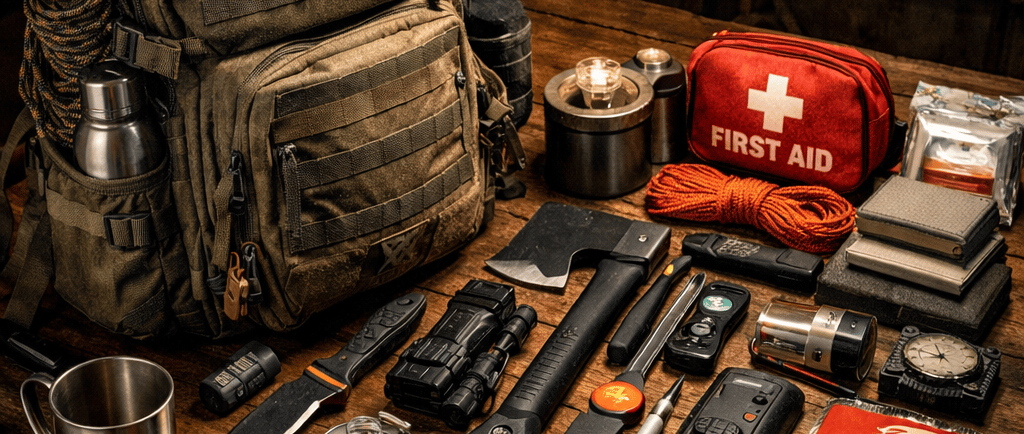
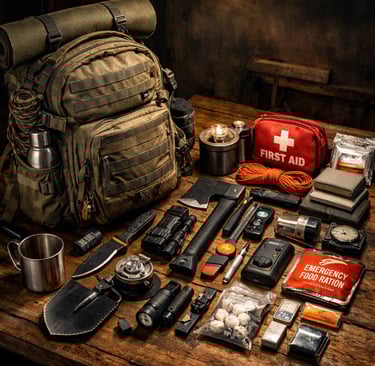
Disasters rarely give warnings.
Power grids fail. Conflicts escalate. Severe storms knock out infrastructure. Civil unrest can disrupt supply chains overnight.
In these situations, having a bug out bag ready means you can leave quickly with everything needed to survive the first 72 hours of an emergency.
A bug out bag (sometimes called a go bag) is a portable survival kit designed to keep you alive during evacuation scenarios such as:
War or civil conflict
Long-term power outages
Natural disasters
Infrastructure collapse
Chemical or environmental emergencies
This guide is designed for complete beginners who want a practical, realistic bug out bag without wasting money on gimmicks.
Let’s start with the most important piece of gear..
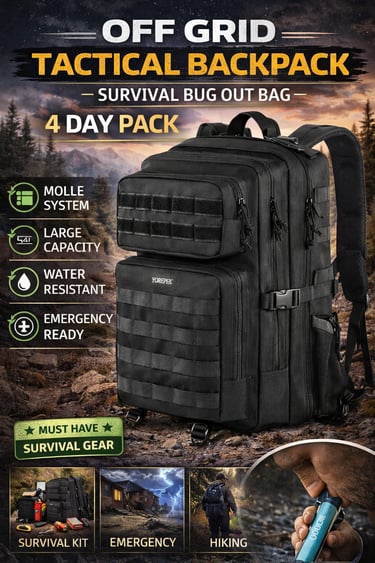
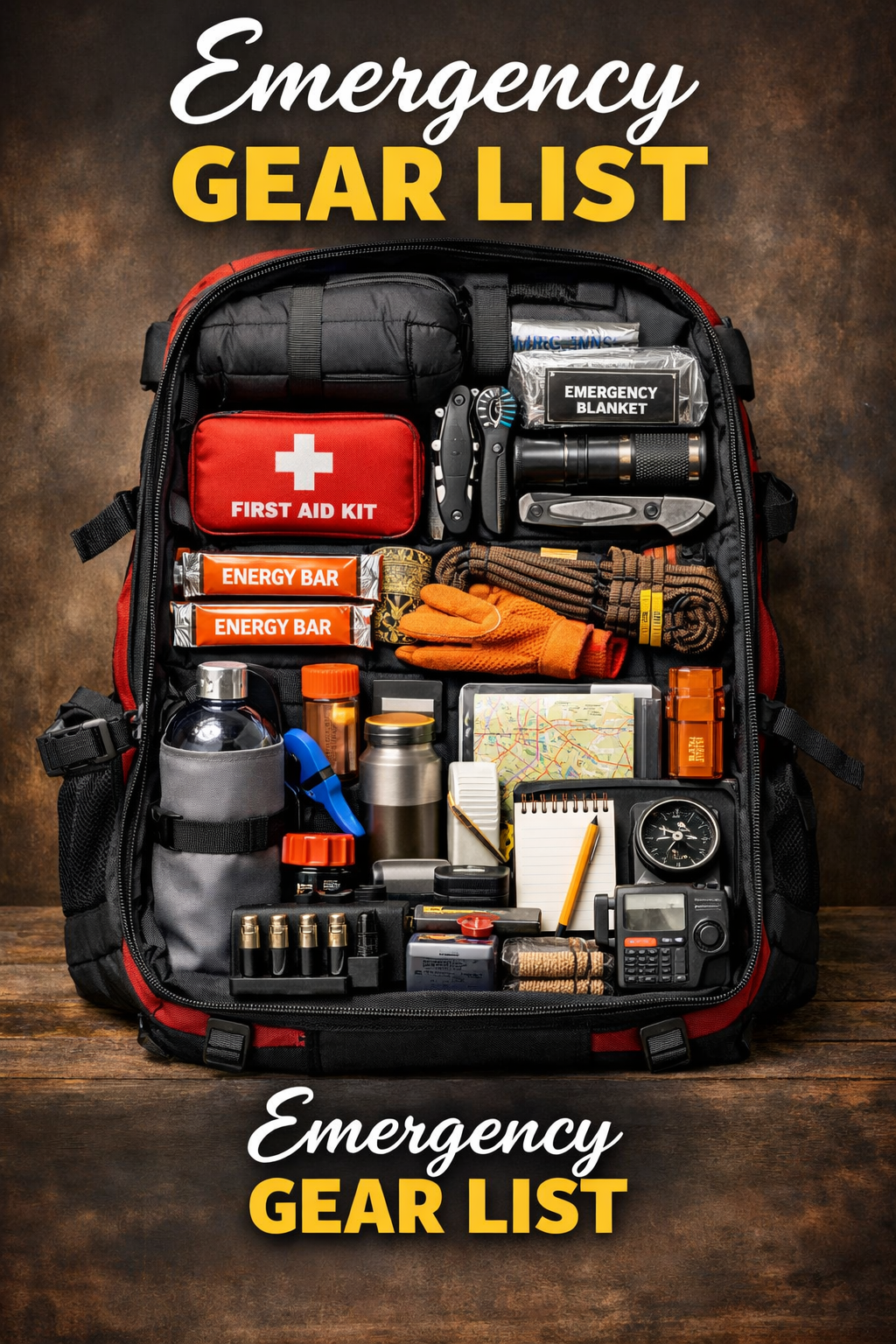
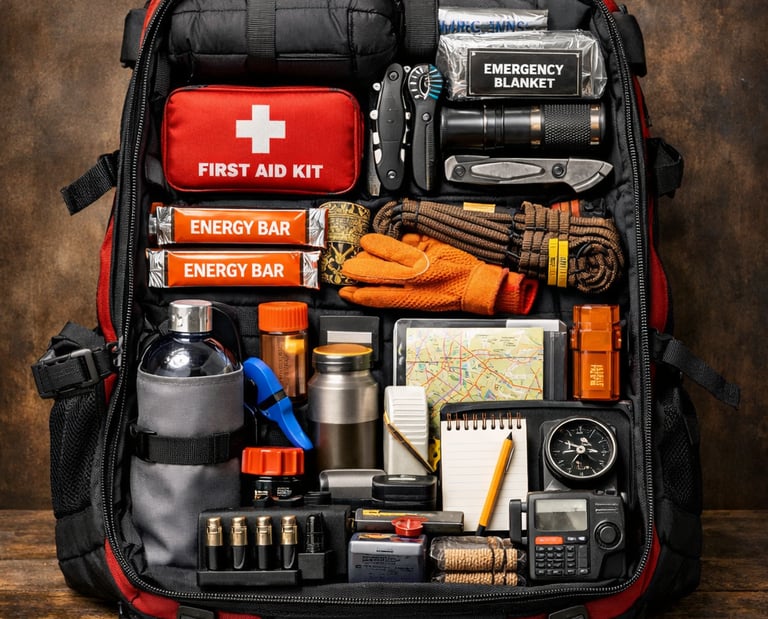
1. The Right Backpack (Your Bug Out Bag Foundation)
Your bug out bag is only as good as the backpack holding it.
A weak bag will rip, break, or become uncomfortable after long periods of walking. In an emergency evacuation, you may need to carry your bag for miles.
Look for:
40–60 litre capacity
Military-grade stitching
Water-resistant material
MOLLE webbing
Multiple compartments
Padded shoulder straps
Waist support belt
These features distribute weight evenly and allow you to organize your survival gear efficiently.
Recommended beginner option:
🟠 [High Capacity Tactical Bug Out Backpack – Check Price on Amazon]
A good bug out bag should hold enough supplies for 3 days of survival, which is the critical window most emergencies fall within.
2. Water: Your Most Critical Survival Resource.
Humans can survive weeks without food.
But without water, survival becomes dangerous after just 72 hours.
Your bug out bag should contain multiple water solutions:
Primary water supply.
1–2 litres of bottled water
Water purification method
Portable filter
Water purification tablets
Emergency backup
Collapsible water container
Many beginner preppers make a major mistake: they pack water but no way to filter new sources.
Streams, rivers, and lakes may contain bacteria like Giardia or E. coli.
A compact survival filter solves this problem.
🟠 [LifeStraw Personal Water Filter – See Today’s Amazon Price]
This small tool can filter thousands of litres of water, making it one of the most valuable items in any bug out bag.
3. Emergency Food (High Calories, Long Shelf Life)
Food should be:
Lightweight
High calorie
Long shelf life
Ready to eat
Avoid packing canned food. It’s heavy and inefficient.
Better options include:
Survival ration bars
Freeze-dried meals
Energy bars
Trail mix
Emergency ration bars are designed for disaster preparedness and often last 5 years or more.
🟠 [Emergency Food Ration Bars – Check Availability on Amazon]
Three days of food usually requires 6,000–9,000 calories per person.
A useful trick many preparedness blogs don’t mention:
Pack comfort snacks like chocolate or sweets. In high-stress situations, small morale boosters can significantly improve decision-making and mental resilience.
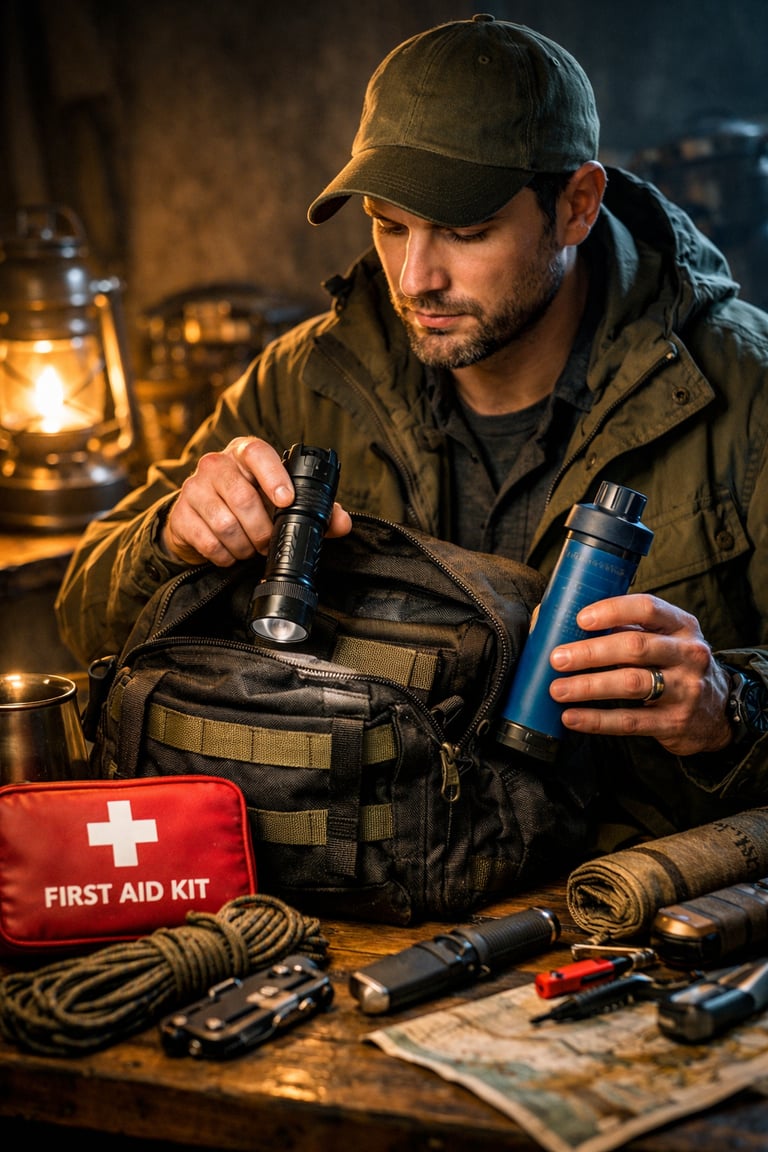
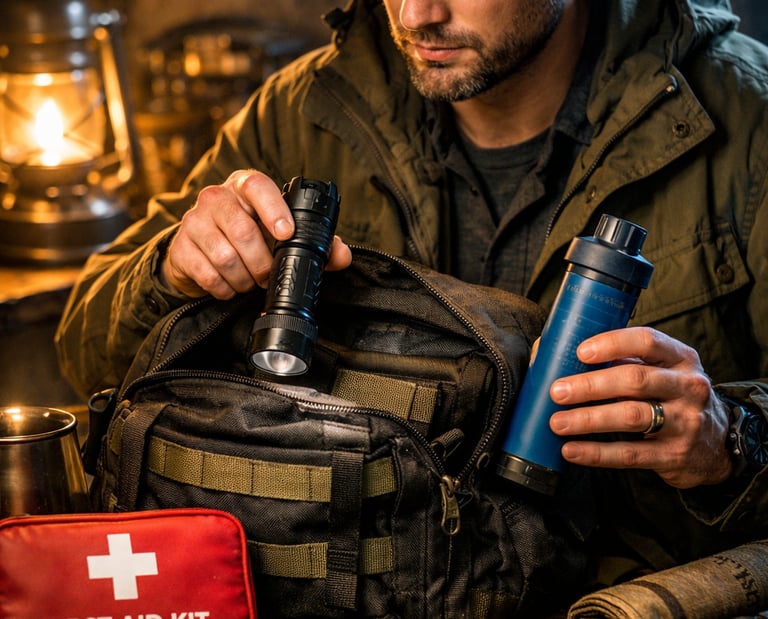
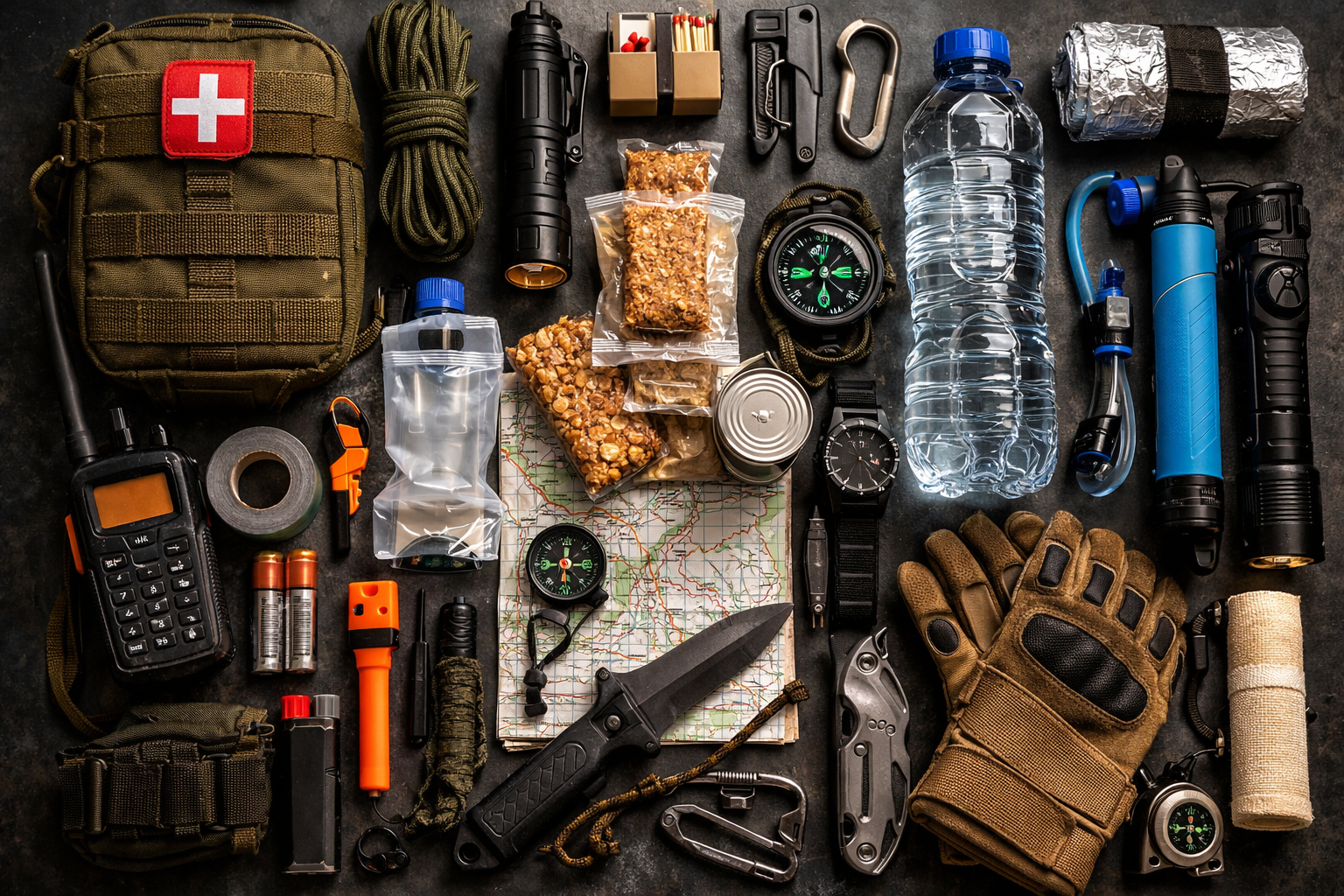
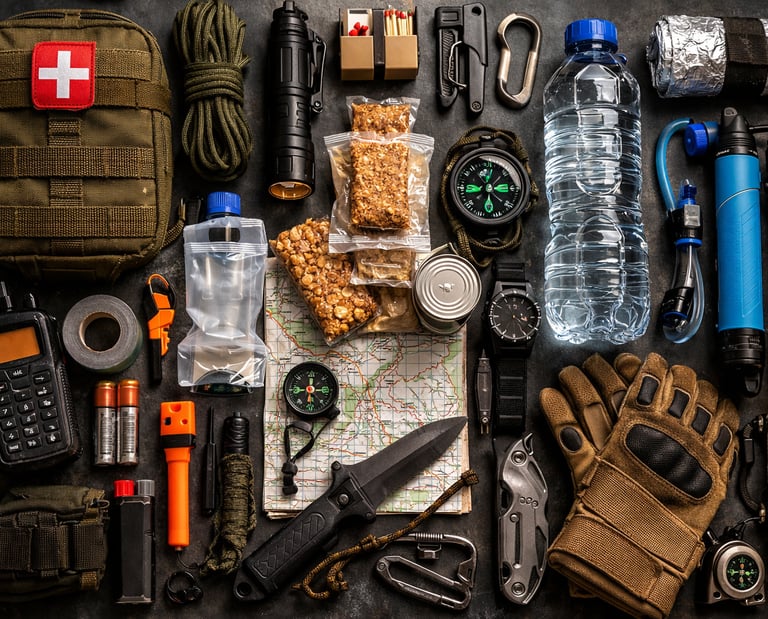
4. Emergency Light Sources
Power outages are common during disasters.
Darkness creates additional dangers such as injuries, navigation problems, and panic.
Your bug out bag should include multiple light sources:
Primary light
LED flashlight
Backup
Headlamp
Emergency option
Hand crank flashlight
A hand-crank flashlight is ideal because it works without batteries.
🟠 [Emergency Hand Crank Radio & Flashlight – View on Amazon]
Some models also include:
Solar charging
NOAA weather alerts
USB phone charging
This makes them extremely valuable in extended emergencies.
5. First Aid and Medical Supplies.
In emergencies, hospitals may be overwhelmed or unreachable.
Your bug out bag should include a compact but comprehensive first aid kit.
Essential medical items include:
Bandages
Antiseptic wipes
Gauze
Painkillers
Medical tape
Antihistamines
Tweezers
Gloves
Advanced preppers also add:
Tourniquet
Trauma shears
Burn gel
A ready-made trauma kit is usually the easiest solution.
🟠 [Professional Tactical First Aid Kit – Check Price on Amazon]
Store your first aid kit in a waterproof pouch so supplies stay clean and usable.
6. Fire Starting Tools.
Fire provides:
Warmth
Light
Cooking ability
Water purification
Psychological comfort
Your bug out bag should always include multiple fire-starting methods.
Good options include:
Waterproof matches
Ferrocerium rod
Lighter
Many survival experts prefer ferro rods because they work even when wet.
A useful trick beginners overlook:
Pack cotton balls soaked in petroleum jelly inside a small container. They make extremely effective emergency fire starters.
7. Emergency Shelter.
In evacuation scenarios, you may need to sleep outdoors.
A bug out bag should contain lightweight shelter items such as:
Emergency thermal blanket
Compact tarp
Paracord
Thermal blankets are incredibly effective. They reflect up to 90% of body heat, helping prevent hypothermia.
🟠 [Emergency Mylar Thermal Blankets (4 Pack) – See Amazon Deal]
Even experienced hikers carry these because they weigh almost nothing.
8. Communication and Navigation Tools.
During disasters, mobile networks often fail.
Include alternative communication methods like:
Hand crank emergency radio
Paper maps
Compass
Whistle
A whistle may seem simple, but it can signal for help from much greater distances than shouting.
Three whistle blasts is widely recognized as a distress signal.
9. Personal Documents and Cash.
Many preppers overlook this step.
Include copies of:
Passport
ID
Medical records
Insurance documents
Emergency contacts
Store them in a waterproof folder.
Also pack small cash bills. Card payments may not work during power outages.
10. Hygiene and Sanitation
Hygiene becomes critical during extended emergencies.
Include:
Wet wipes
Toothbrush
Toothpaste
Hand sanitizer
Toilet paper
Small towel
Poor sanitation can quickly lead to illness in disaster environments.
One overlooked item: trash bags.
They can be used for:
Rain protection
Waste disposal
Emergency poncho
Ground cover
11. The “Forgotten Items” Most Blogs Never Mention
Experienced preppers often include small but extremely useful items such as:
Rubber bands
Strong zip ties
Duct tape
Notebook and pencil
Spare glasses
Mini sewing kit
These tiny tools can solve unexpected problems that larger survival gear cannot.
For example:
Zip ties can repair broken backpack straps.
Duct tape can patch shelters or fix clothing.
Preparedness isn’t just about survival gear — it’s about adaptability.
Final Thoughts: Preparedness Brings Peace of Mind.
Building a bug out bag is one of the smartest steps anyone can take toward emergency preparedness.
It doesn’t mean expecting disaster.
It simply means being ready.
When the unexpected happens, the people who stay calm and prepared are the ones who protect themselves and their families.
Start small.
Build your kit gradually.
And most importantly — pack your bag before you need it.
🟠 [See Today’s Best Selling Bug Out Bags on Amazon]
Preparedness today can make all the difference tomorrow.

Recommended Survival Gear
Tactical Military Backpack – Check price on Amazon
LifeStraw Personal Water Filter – Check price on Amazon
Emergency Food Ration Bars– Check price on Amazon
Emergency Hand Crank Radio & Flashlight– Check price on Amazon
Professional Tactical First Aid Kit – Check Price on Amazon
Emergency Mylar Thermal Blankets (4 Pack) – See Amazon Deal
See Today’s Best Selling Bug Out Bags on Amazon
As an Amazon Associate, I earn from qualifying purchases.